
 A written interview series
Chautauqua Ink House
Songwriting
What We Remember About Each Other
Tyler Nail wrote “Jose Pozo” about a late family member. In the song, he remembers going to the movies with his cousins in the years Jose came home.
Interview by Shawn DiLorenzo ·
Download the PDF edition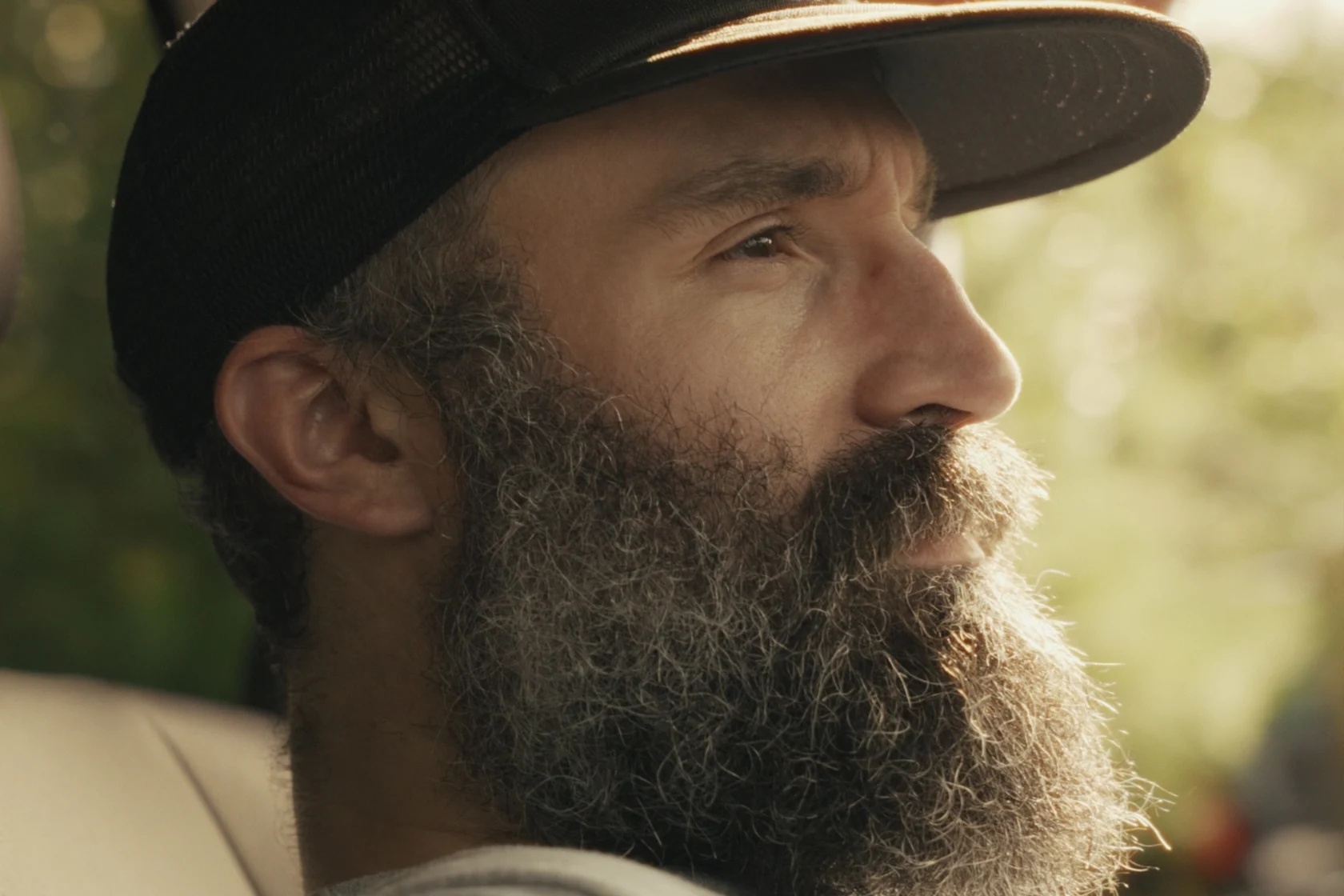
Tyler Nail is an Americana songwriter and multi-instrumentalist from Winston-Salem, North Carolina. He moved to Providence, Rhode Island, in 2024. His 2025 album Family credits him as songwriter, performer, producer and engineer. That year, Motif named him a Rhode Island Music Awards nominee for Favorite Americana Act and Favorite Singer/Songwriter.
In “9 Pound Hammer,” a machine takes the place of a worker who has died. In the last verse, his child takes a job heating it for half the father’s pay. Nail told Ink House the song began with his own father trying to apply for jobs online.
Ink House Could you take us through how an everyday observation became one of your songs?
Tyler Nail Nearly all of my songs come from everyday observations, but the way the observation is crafted varies. It can be very true to the facts of the observation, a loose reference to the observation, or just the essence of the observation. A few years ago I released an album called Family, and I can use some of the songs from that album as examples of these variations.
The song Jose Pozo is about a late family member. For that song, I wrote my memories as truthfully as possible. I followed a fairly standard poetic pattern of rhyme and wrote my memories straightforwardly.
In the song Cussing at a Neon Sign, I was pulling from memories accumulated over many years. Memories of my grandmother telling me about her life, or memories from my own childhood. Rather than writing them like a biography, I crafted the feeling I experience when I access those memories. I don't say, "My grandmother told me about her and her cousins getting in trouble as kids." I say, "Will you tell me about the time a pair of kids were running round an apple farm, smoking Daddy's cigarettes and hiding Mama's garden gloves underneath their arms." To me, recreating the feeling of a memory can be more truthful than simply describing it.
9 Pound Hammer came from an observation of my father trying to apply for jobs online, back when companies were newly moving the application process into the digital space and away from paper. My father was a very experienced and capable guy, but using a computer was crippling to him. This loosely reminded me of the legend of John Henry and his race against the steam-powered engine. It's a story about man's eternal fight with technology and progress, and the sadness of losing his value – his labor, his strength, his capability. Noticing this similarity expanded into a whole song, but it started with a very simple, tiny observation. The story I told captured the essence of the observation, though it strayed away from the original facts of the moment.
I believe that all art comes from observation. I practice observation almost like a meditation. I challenge myself to pay attention to the constant struggles and relationships between people and their environments. I think observing people in different circumstances is foundational for storytelling, and storytelling is at the heart of art.
Ink House When you tell a story in an essay rather than in lyrics, what changes in the way you approach it?
Tyler Nail Essays and songs require very different processes for me. While both consist of similar components, like arc, imagery, perspective, and careful word selection, I treat essays more linearly. I want essays to start somewhere clear and end somewhere clear, and I want the navigation from start to finish to be logical and smooth.
Songs are looser and freer. I want a song to be whatever it needs to be, regardless of where it takes me. Songs can be more mysterious than essays. They also have the added component of being performed, which influences the way they're created. A musician can convey emotion through a performance, creating more avenues for bringing a song to life. Essays are meant to be read, so the words on the page are doing all of the work to persuade, connect, or ring true for the reader.
I think the writing process for essays has to be more explicit than it does for lyrics. Songs have melody, voice, instrumentation, tempo, and intensity, all of which help communicate the meaning and feeling of the words.
The turn in the last chorus
Ink House In your essay about “Way to Live,” you describe family stories and questions about your own life that went into the song. What, if anything, changed in how you understood those questions as you wrote it?
Tyler Nail In the years leading up to writing Way to Live, I had steered pretty clear of using much religious language, like talking about going to church on Sunday. I felt that the song was in danger of sounding too instructive or preachy for my taste. But during the process, I stumbled upon the big change that occurs in the song at the last chorus, and that changed the meaning of the entire song for me. Not only did it alleviate any concern I might have had about the song being preachy, but it made the song into something bigger.
Having grown up with a religious upbringing and a rebellious spirit, I've sometimes struggled to understand the devotion to religion that I observed in my family. Writing this song made me discover some things that I can't put perfectly into words. It made me reflect on how deeply and lovingly devoted my family is to one another, and how important faith has been to them for generations. It also made me realize that I've sometimes felt like I wasn't properly part of that club.
But most of all, it made me confront the value of tradition. Politically, socially, and personally, we are often so preoccupied with the idea of progress. And progress is a beautiful value. But this song helped me understand the value of tradition, not as a talking point or a sacrifice, but as a form of preservation – of the family, of the self, of the tribe, of the species, and of society. The last line of the song explains where I stand within that realization: "I'm still looking for the way I'm supposed to live." I realized that I hadn't fully recognized or accepted the value of tradition, and that this gave me a feeling of incompleteness. I now value the idea that the pursuit of progress should coexist with tradition, rather than be at the expense of tradition.
What goes in the notebook
Ink House Nail writes on his website that he has kept some kind of journal since middle school.
Ink House You’ve written about your journals holding rough ideas and unfinished work. What does writing give you when you’re doing it just for yourself?
Tyler Nail I learned at a young age that writing was a way for me to express myself more clearly than I sometimes do verbally. I don't know how everyone's minds work, but mine often builds into a cluttered, cramped mess. When it gets cluttered, writing things down – observations, imagery, intentions, plans, projects – can help clear my mind and give me a feeling of preparedness or mental space.
Writing for myself is my default reason for writing, even if I'm writing an essay, a story, a letter, or a song. These writings may have another purpose, but writing allows me to express something that I need to see live outside of my mind.
Ink House For someone who doesn’t consider themselves a writer or musician but wants a way to express themselves, what is one small thing they could try?
Tyler Nail My top recommendation would be journaling in some way. I always have an everyday journal with me, which allows me to let my mind spill onto paper for any reason. I might write lyrics, shopping lists, notes to myself, notes about something I'm learning, funny sketches, or someone's phone number. It's a chaotic journal where anything I want to have on paper can live.
A more creative option might be an imagery journal. This is a journal that a person can use specifically to write down images they see around them that stand out as interesting. A white bird at a graveyard, a half-smoked cigarette, blue broken glass on the street, a green paper bag. The regular practice of observation becomes more natural when the observation has a place to land.
Lastly, I would say to explore what excites you. For me, writing was something I fell in love with in fourth grade. Music was something I had always been in love with, and when I got a guitar at 16, I became obsessed with it. It was natural. For some folks, that same love might come from painting, photography, drawing, dancing, cooking, or something else. It doesn't have to be a form of expression related to language or traditional art. A creative outlet that allows an individual to explore their own unique contribution to a craft, a skill, a tradition, or some random domain can brighten one's life. One doesn't have to achieve perfection or become a pop culture icon. Sometimes it's important to simply explore, play, and enjoy.
That exploration makes us into students and teachers at the same time. Recipients and creators. We find a balance between the wisdom outside of us and the potential within us. So my advice would be to follow your bliss, your excitement, your curiosity, and whatever makes you feel more like yourself, and less like your days are a sleepy repetition.
Ink House Think of someone you grew up with. What happened only when they were around?